Key points
- Pregnancy tissue left in the uterus after a miscarriage, a termination or a birth.
- Signs: prolonged or recurrent bleeding, pain, sometimes fever.
- Diagnosed on ultrasound, which shows vascularised tissue in the cavity.
- Targeted hysteroscopic removal lowers the risk of adhesions compared with curettage.
Contents
What is it?
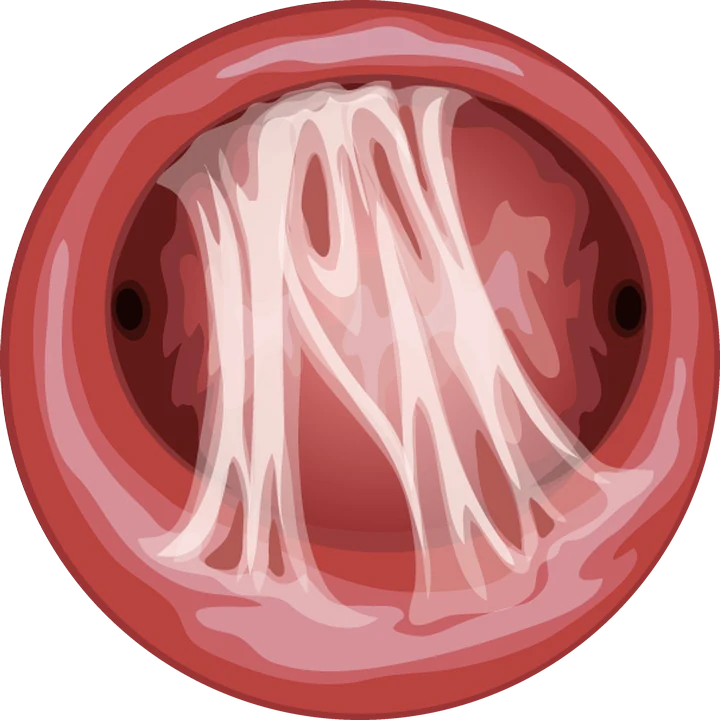
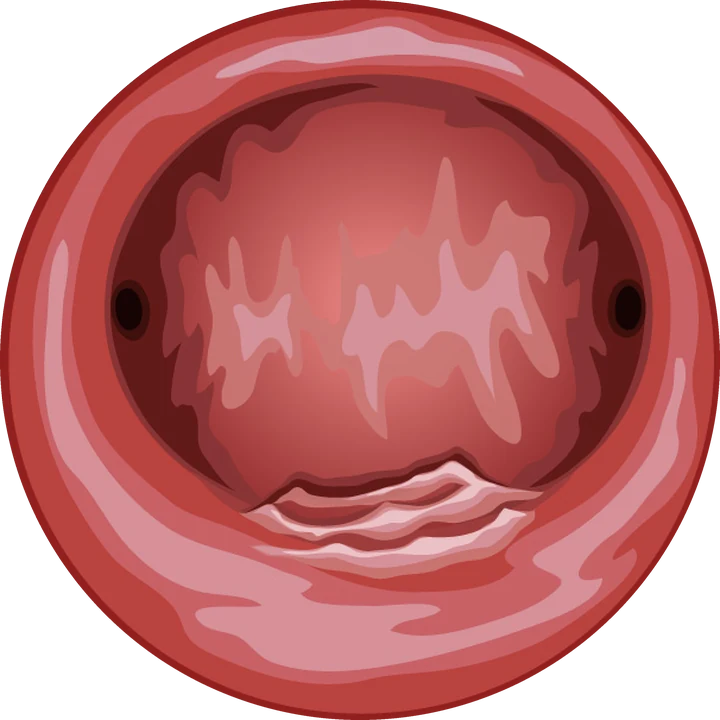
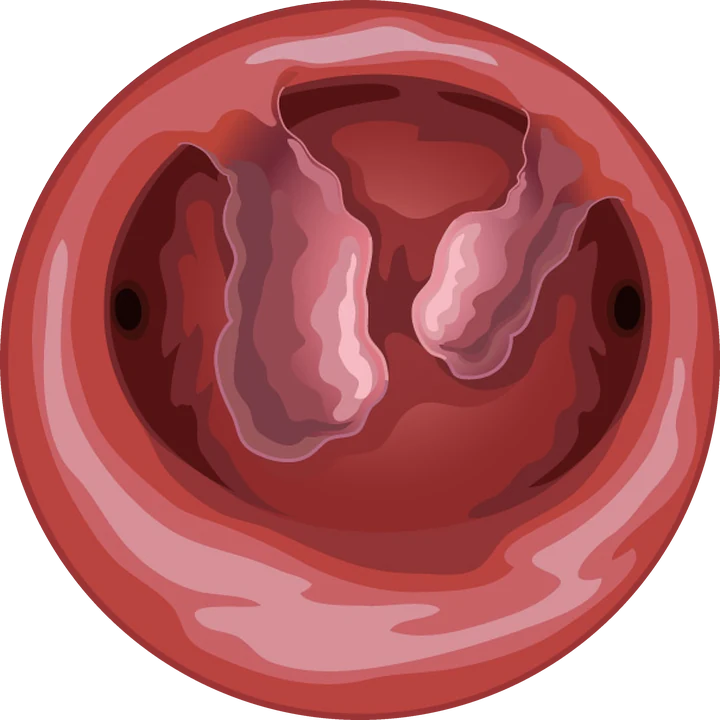
After a pregnancy, the uterus should empty completely. Sometimes a fragment of trophoblast (the future placenta), placenta or membranes stays attached to the wall: this is retained tissue. It is more common after a miscarriage managed with medication, after a termination, or after a birth with incomplete delivery of the placenta.
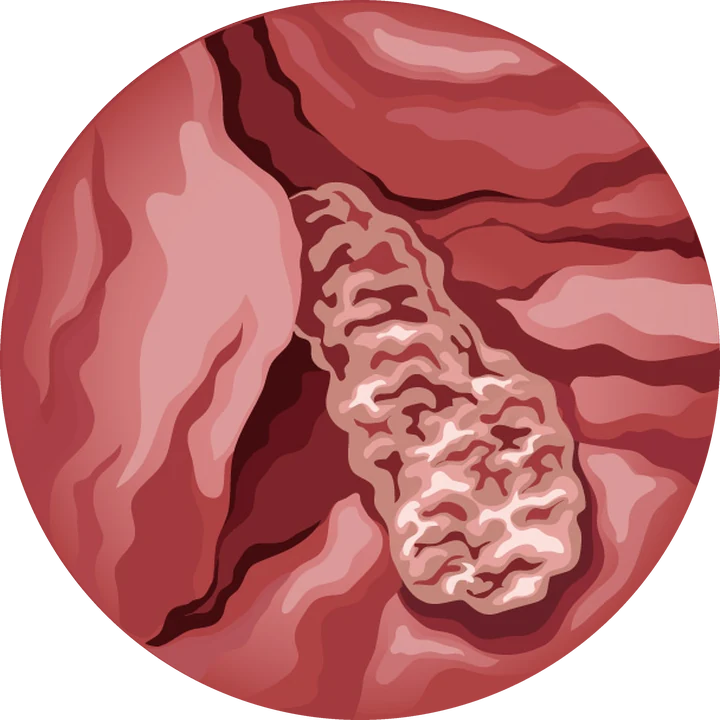
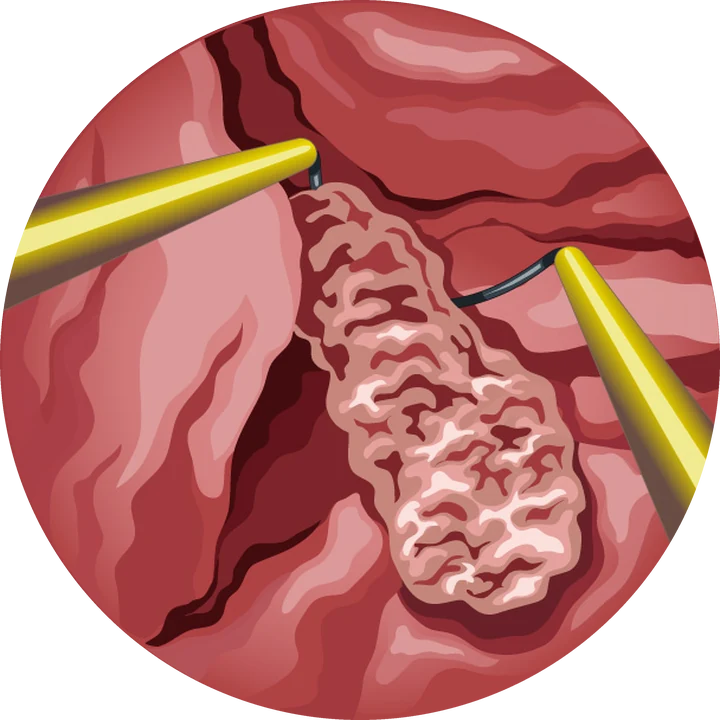
Hysteroscopic view · illustration
Which signs should prompt a visit?
- bleeding lasting more than two to three weeks, or starting again;
- pelvic pain;
- fever or offensive discharge, which suggest infection and need prompt review.
How is it diagnosed?
Transvaginal ultrasound with Doppler shows an image in the cavity and its blood supply. A pregnancy hormone (hCG) level completes the assessment. Hysteroscopy confirms the retained tissue and shows where it is attached.
Why hysteroscopy rather than curettage?
Curettage scrapes the cavity blindly: it can leave tissue behind or damage the deep layer of the endometrium, which promotes adhesions. Hysteroscopy removes only the retained tissue, under direct vision, with a cold loop or a morcellator. Comparative studies report fewer adhesions and better later fertility after hysteroscopic removal.
| Option | Situation |
|---|---|
| Watchful waiting or medication | Small amount of tissue, light bleeding |
| Hysteroscopic resection | Persistent tissue, plans for pregnancy, older retained tissue |
| Aspiration | Large recent retention, heavy bleeding |
After the procedure
You go home the same day and resume activity within 24 to 48 hours. A new pregnancy can be considered once normal periods return. After a previous curettage, a follow-up hysteroscopy may be offered to check for adhesions.
Frequently asked questions
How long does bleeding normally last after a miscarriage?
Bleeding usually settles within one to two weeks. Bleeding beyond two to three weeks, or starting again, should prompt a visit.
Is retained tissue dangerous?
It can cause ongoing bleeding and infection. Fever or offensive discharge need prompt review.
Why avoid curettage?
Curettage can damage the deep layer of the endometrium and cause adhesions. Hysteroscopy removes only the retained tissue.
When can I try for another pregnancy?
Usually once normal periods return after the procedure.
References
Written and reviewed by Dr Olivier Kadoch · 18 October 2026
This page is for information; it does not replace a consultation. Each situation is discussed individually.