Key points
- A single miscarriage does not usually call for hysteroscopy.
- Much lighter or absent periods after a curettage should prompt a search for adhesions.
- After recurrent miscarriage, uterine anatomy is assessed, first by 3D ultrasound, then by hysteroscopy if needed.
- Adhesions are treated by hysteroscopy; the benefit of septum resection on live births is debated.
Contents
Miscarriage is common
About one pregnancy in six to eight ends in the first trimester, most often because of a chromosomal abnormality in the embryo. A single miscarriage does not usually point to a problem with the uterus and does not reduce the chance of a future pregnancy.
Recurrent miscarriage is defined as three consecutive losses in French guidelines, and from two losses in the European ESHRE guideline. It affects 1 to 2% of couples and warrants a work-up.
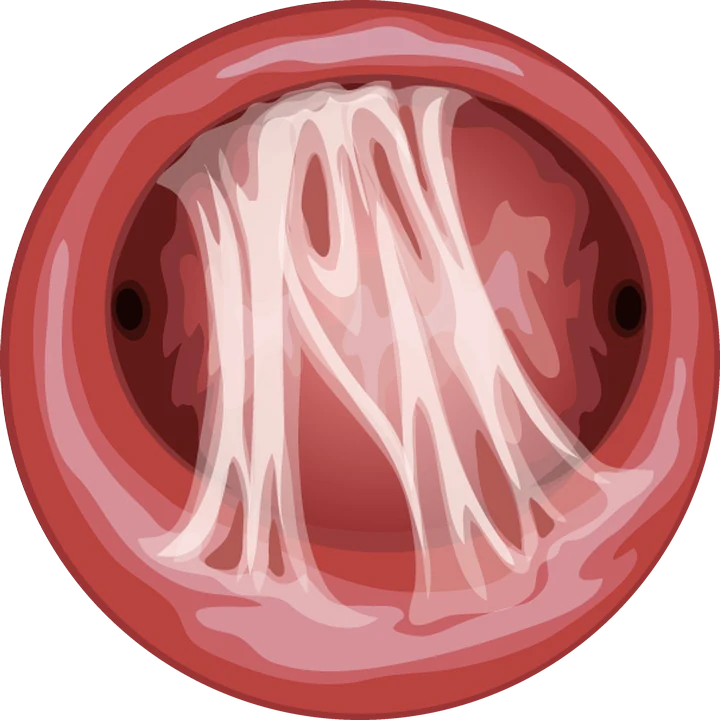
Hysteroscopic view · illustration
Adhesions after miscarriage
Adhesions are bands joining the walls of the uterus. They mostly follow a procedure on a pregnant uterus: curettage, suction or removal of retained tissue. In a meta-analysis, about one woman in five examined after a miscarriage had adhesions, and the risk rose with the number of curettages.
| Sign after a miscarriage | Think of |
|---|---|
| Much lighter or absent periods | Adhesions |
| Period-like pain without bleeding | Low adhesions blocking the flow |
| Prolonged bleeding, persistent image on ultrasound | Retained tissue |
| Difficulty conceiving again | Adhesions, retained tissue |
Hysteroscopy is the reference test: it shows and grades the adhesions and divides them at the same visit or as a day case. See intrauterine adhesions.
Reducing the risk at the time of miscarriage
When a procedure is needed, suction is preferred to curettage, which scrapes the cavity and favours adhesions. Medical treatment, or waiting when possible, avoids any procedure. If tissue remains, hysteroscopic removal takes out only the remaining tissue under direct vision: see retained products of conception.
Recurrent miscarriage: the role of hysteroscopy
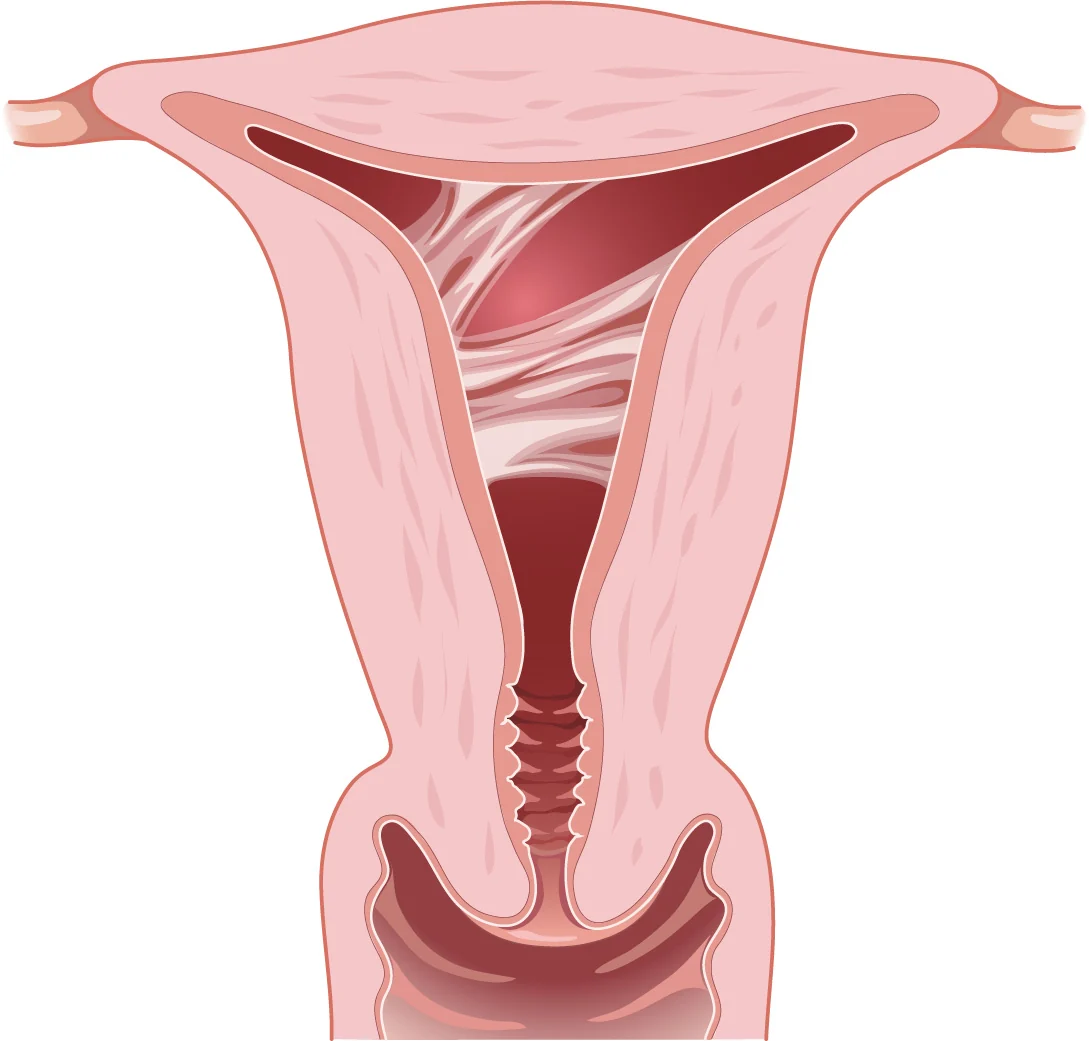
Uterine malformations are more frequent in women with recurrent miscarriage, around 13% versus 5% in the general population. The 2022 ESHRE guideline recommends assessing uterine anatomy, preferably by 3D ultrasound. Hysteroscopy completes the assessment and looks for a septum, adhesions, a polyp or a fibroid distorting the cavity.
Depending on the situation, the work-up also includes antiphospholipid antibodies and thyroid tests. It is often normal: most couples go on to have a baby.
Uterine septum: a case-by-case decision
Hysteroscopic septum resection was long offered routinely. The TRUST randomised trial, published in 2021, found no increase in live births after resection compared with expectant management. The decision is therefore made case by case, taking into account obstetric history, septum size and your wishes, after discussion: see uterine malformations.
When should hysteroscopy be done?
After a miscarriage, the examination is usually done once periods have returned, in the first half of the cycle, or earlier if retained tissue is suspected. After adhesiolysis, a follow-up hysteroscopy is often offered a few weeks later, before trying for a new pregnancy.
Frequently asked questions
Do I need a hysteroscopy after a miscarriage?
Not usually after a single miscarriage. It is indicated if periods become much lighter or stop after a curettage, if tissue persists, or after recurrent miscarriage.
Can a curettage prevent a future pregnancy?
It can cause adhesions, especially if repeated. These are found and treated by hysteroscopy, which in most cases restores a normal cavity.
How long should I wait before trying again?
After a simple miscarriage, you can try again as soon as you feel ready. After adhesiolysis, a check of the cavity is usually done first.
Should a septum be removed after miscarriages?
Not routinely: the TRUST trial showed no benefit on live births. The decision is discussed case by case.
References
Written and reviewed by Dr Olivier Kadoch · 18 October 2026
This page is for information; it does not replace a consultation. Each situation is discussed individually.