Key points
- A defect in the caesarean scar, common on ultrasound, causing symptoms in a minority of women.
- Typical sign: brown spotting that extends periods by several days.
- Ultrasound measures the niche and the remaining muscle, which determines the technique.
- Hysteroscopic isthmoplasty if the wall is thick enough; laparoscopic repair otherwise.
Contents
What is an isthmocele?
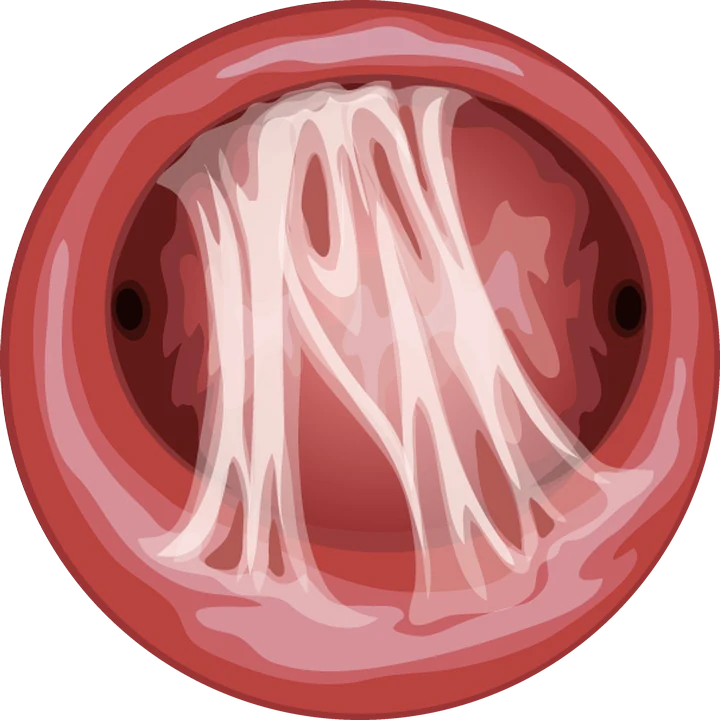
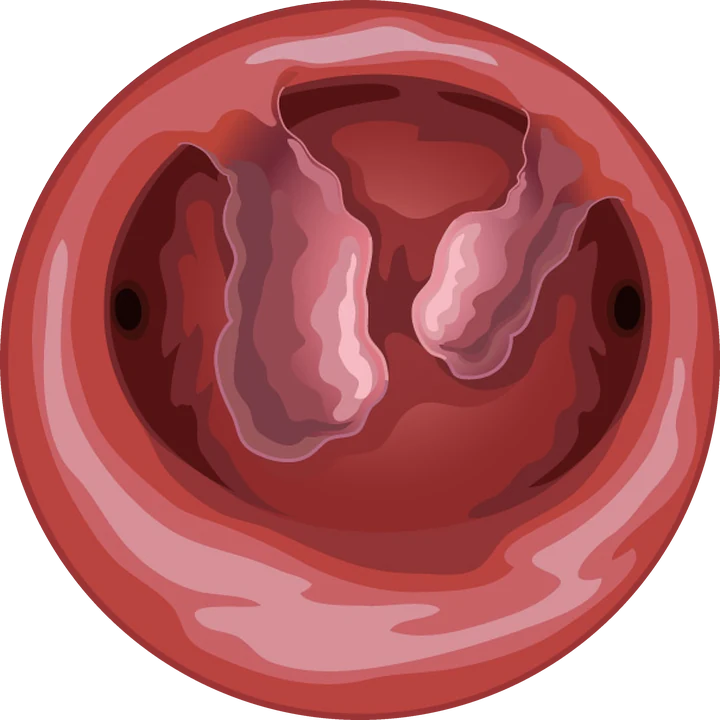
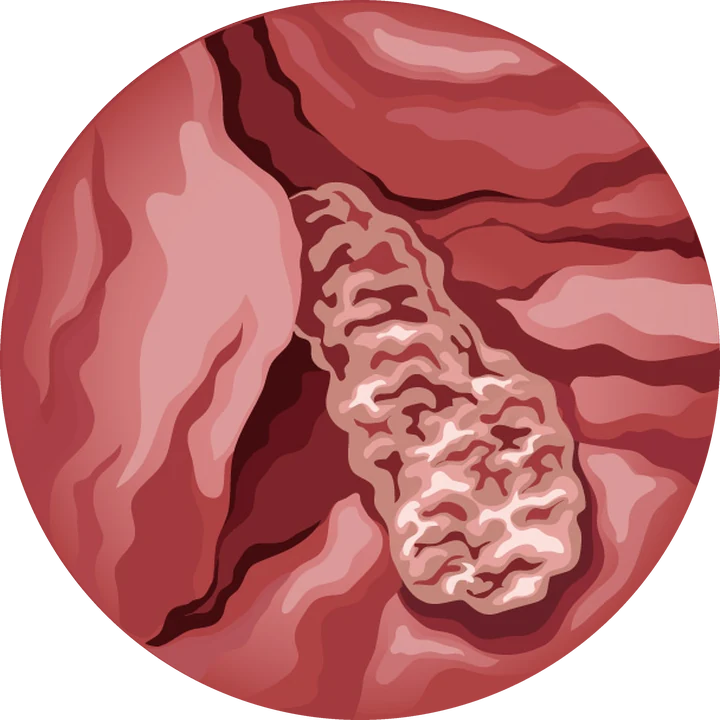
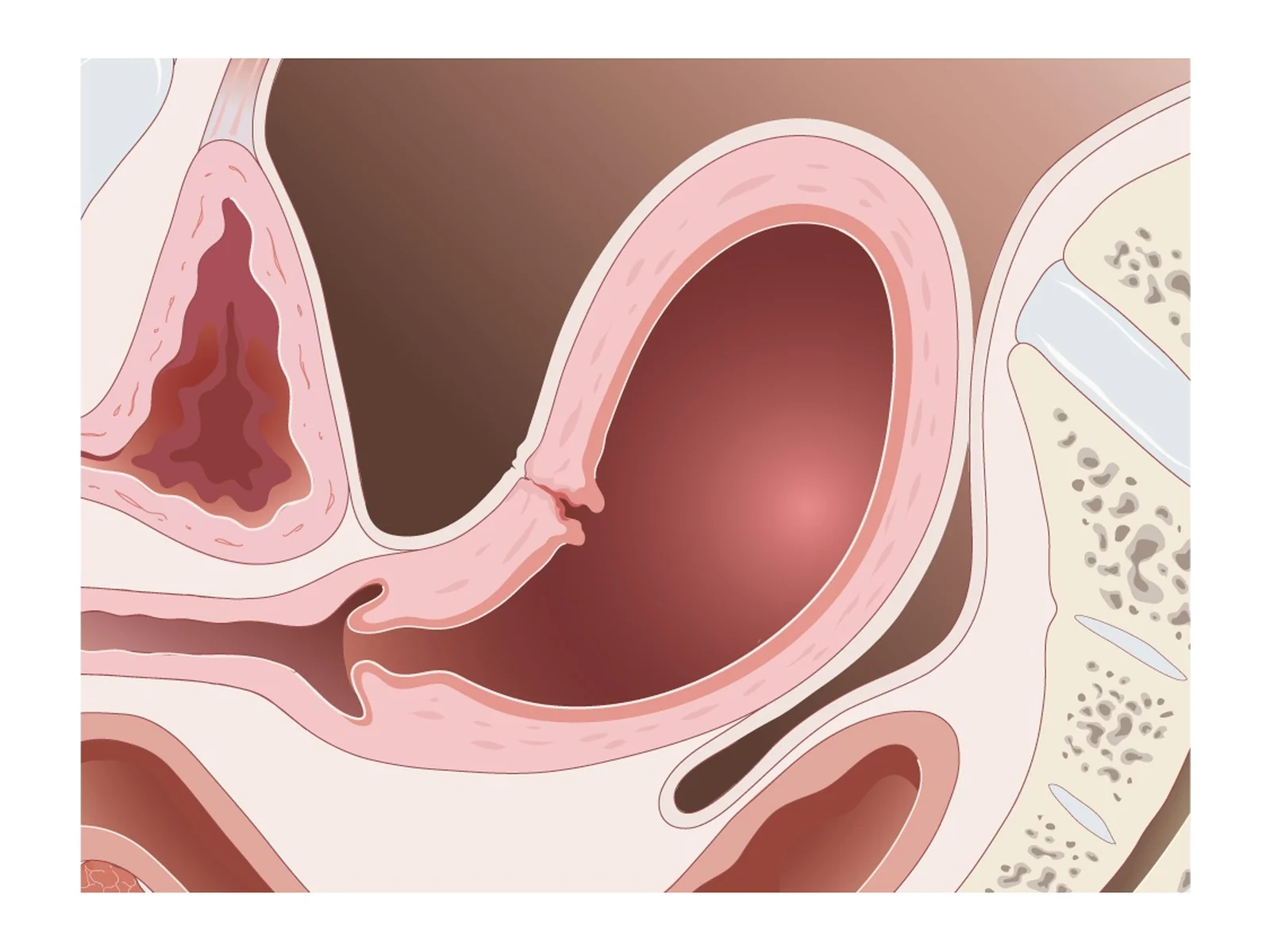
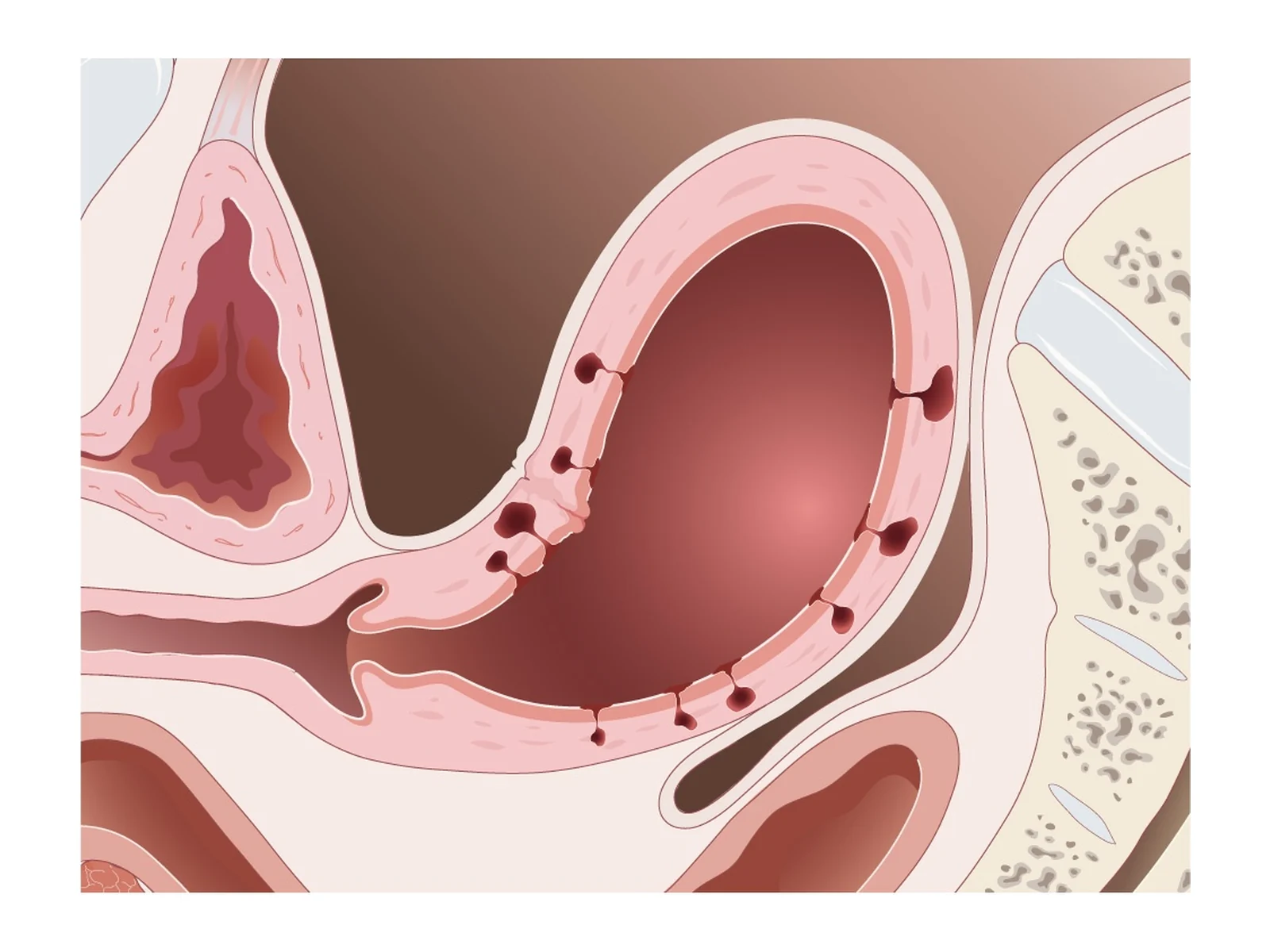
During a caesarean section, the uterus is opened at the isthmus, the lower part just above the cervix. As it heals, the wall can keep a dent on the cavity side: this is the niche, or isthmocele. Expert consensus defines it as an indentation at least 2 mm deep on ultrasound.
A niche is common after a caesarean, but only some women have symptoms, which is then called caesarean scar disorder.
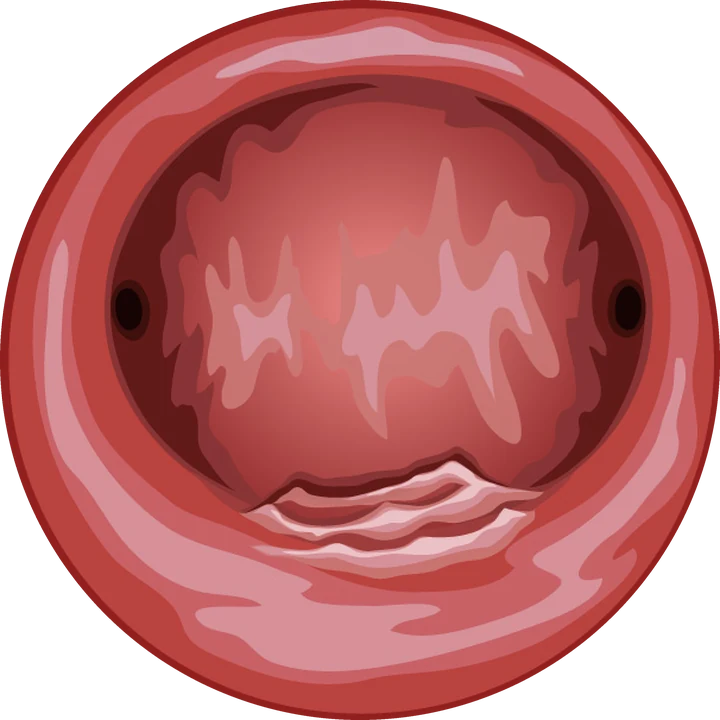
Hysteroscopic view · illustration
What are the symptoms?
- brown spotting that prolongs periods by several days;
- pelvic or period pain;
- pain during intercourse;
- secondary infertility: fluid pools in the niche and flows back into the cavity, which hinders implantation.
In a future pregnancy, a very thin scar carries rare but serious risks, such as a pregnancy implanted in the scar.
How is it diagnosed?
Transvaginal ultrasound, ideally at the end of a period, shows the niche and measures its depth, width and above all the thickness of muscle in front of it (residual myometrium). Gel or saline infusion sonography makes the niche easier to see. Hysteroscopy shows a pouch at the isthmus, often containing old blood or mucus, lined with small dilated vessels.
Which treatments?
| Treatment | Indication | Aim |
|---|---|---|
| Hormonal treatment | Troublesome bleeding, no plans for pregnancy | Reduce bleeding |
| Hysteroscopic isthmoplasty | Enough remaining wall (usually 3 mm or more) | Remove the pouch where blood pools |
| Laparoscopic or vaginal repair | Very thin wall, plans for pregnancy | Excise the niche and rebuild the wall |
Hysteroscopic isthmoplasty trims the edge of the niche and coagulates its base, so that blood drains normally. In a randomised trial it shortened spotting compared with no treatment. It is a day case under anaesthesia.
What about a future pregnancy?
The choice between hysteroscopy and laparoscopic repair depends mainly on wall thickness and your plans for pregnancy: hysteroscopy treats the symptoms but does not strengthen the wall. The decision is made together, after ultrasound and, if needed, MRI.
Frequently asked questions
Does every isthmocele need surgery?
No. A niche without symptoms needs no treatment. Niches causing bleeding, pain or infertility are treated.
Does an isthmocele prevent pregnancy?
It can hinder implantation, because fluid pools in the niche and flows back into the cavity. Treating it may improve the chance of pregnancy.
How long does hysteroscopic isthmoplasty take?
About twenty minutes, as a day case, going home the same day.
Can I have a vaginal birth after an isthmocele?
It depends on the scar and your obstetric history. This is discussed during the next pregnancy.
References
Written and reviewed by Dr Olivier Kadoch · 18 October 2026
This page is for information; it does not replace a consultation. Each situation is discussed individually.