Key points
- A common lesion, benign in the vast majority of cases, mainly after 40.
- Symptoms: bleeding between periods, heavy periods, bleeding after the menopause, sometimes infertility.
- Diagnosis: ultrasound, then hysteroscopy, which confirms it and allows removal.
- Hysteroscopic removal, in the consulting room for small polyps, always with tissue analysis.
Contents
What is an endometrial polyp?
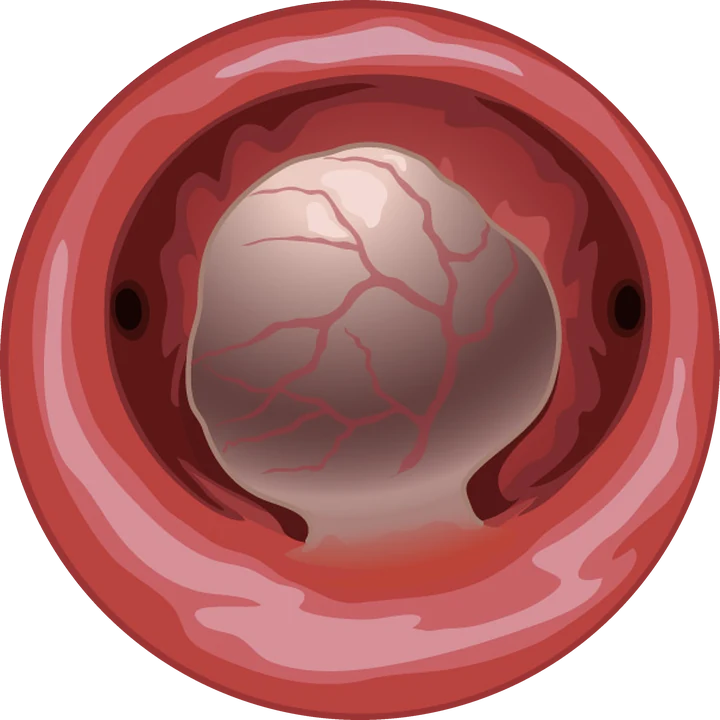
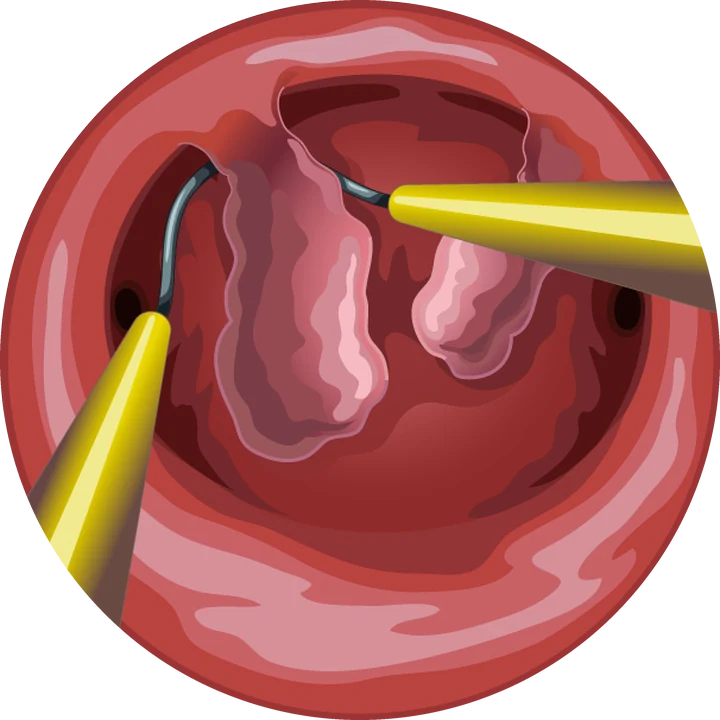
A polyp is a localised overgrowth of the endometrium made of glands, supporting tissue and a small blood vessel. It is attached to the wall by a broad base (sessile polyp) or a thin stalk (pedunculated polyp), and ranges from a few millimetres to several centimetres. There may be one or several.
Polyps are common, especially between 40 and 60. Overweight, the menopause, hormone therapy and tamoxifen, prescribed after breast cancer, increase the risk.
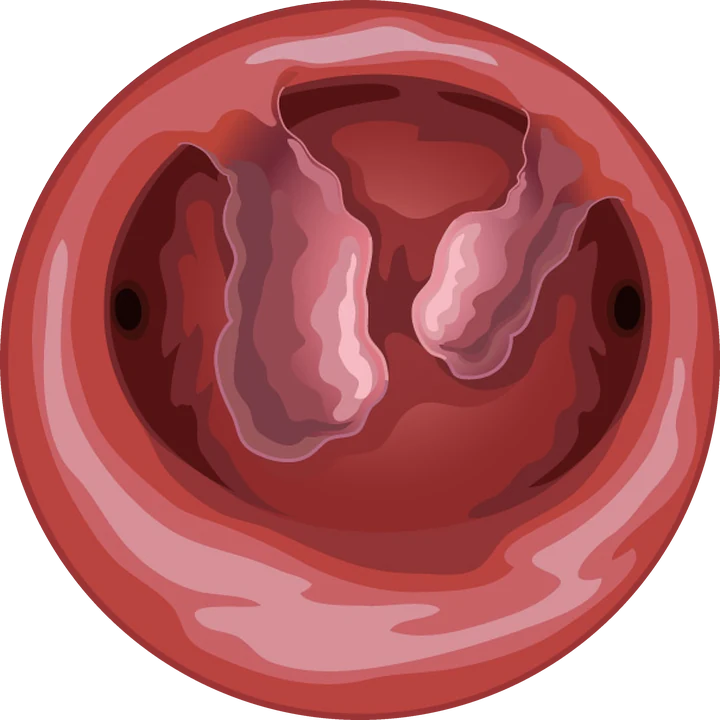
Hysteroscopic view · illustration
Which symptoms suggest a polyp?
- bleeding between periods or after intercourse;
- heavier or longer periods than before;
- any bleeding after the menopause, which must always be investigated;
- difficulty conceiving, or failed IVF.
Many polyps cause no symptoms and are found on a routine ultrasound.
Can a polyp be cancerous?
The risk is low. A meta-analysis found a malignant or precancerous lesion in fewer than 2% of polyps before the menopause, compared with about 5% after the menopause in women who bleed. That is why, after the menopause, a bleeding polyp is removed, and every polyp removed is examined under the microscope.
Before the menopause, a small polyp without symptoms can simply be monitored: some regress on their own.
How is it diagnosed?
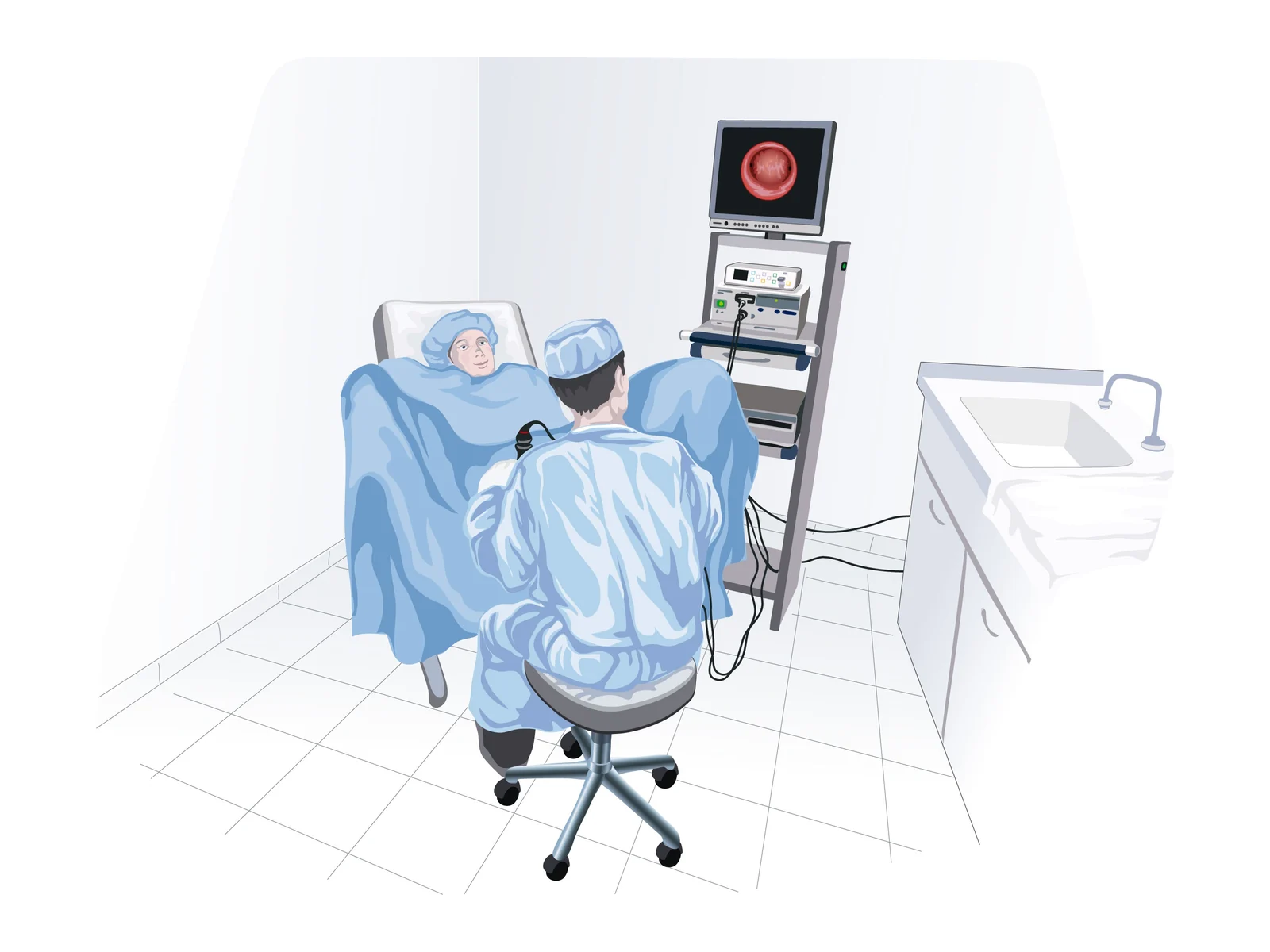
Transvaginal ultrasound, ideally just after a period, shows a rounded image in the cavity. Saline infusion sonography makes the image clearer. Diagnostic hysteroscopy confirms the polyp, counts them, measures the base and often removes it straight away.
How is a polyp removed?
Polypectomy is done by hysteroscopy, without any incision. Blind curettage, without direct vision, is no longer recommended: it often leaves part of the polyp behind.
| Situation | Technique | Setting |
|---|---|---|
| Small polyp | Micro-scissors, grasper or bipolar electrode passed through the hysteroscope | Consulting room, no anaesthesia |
| Large or multiple polyps | Bipolar resectoscope or hysteroscopic morcellator | Theatre, day case |
| After the menopause, broad base | Complete resection of the base | Theatre, day case |
Histological analysis is routine. The result is discussed with you at a follow-up appointment.
Polyps and fertility
A polyp can interfere with embryo implantation. In a randomised trial, removing polyps before insemination markedly increased pregnancy rates. Before IVF, a polyp seen on ultrasound is therefore usually removed, in coordination with your fertility clinic.
After the procedure
Recovery is immediate after removal in the consulting room, and takes 24 to 48 hours after theatre hysteroscopy. Light spotting for a few days is normal. Polyps can recur: a follow-up ultrasound is offered depending on your situation.
Frequently asked questions
Does every endometrial polyp need removing?
No. Polyps that bleed, polyps after the menopause, large polyps and polyps in women trying to conceive are removed. A small symptom-free polyp before the menopause can be monitored.
Is polyp removal painful?
In the consulting room, removing a small polyp feels like period cramps, without anaesthesia. Larger polyps are removed in theatre under anaesthesia as a day case.
Can a polyp come back?
Yes, recurrence is possible, especially with risk factors such as overweight or hormone therapy. A follow-up ultrasound is offered.
Can I get pregnant after polyp removal?
Yes. Removal does not weaken the uterus and improves the chance of implantation. Pregnancy can usually be attempted from the next cycle.
References
Written and reviewed by Dr Olivier Kadoch · 18 October 2026
This page is for information; it does not replace a consultation. Each situation is discussed individually.